“There are moments in nature so profound, so overwhelmingly beautiful, that they transcend photography and become pure emotion.”
The dust hangs golden in the late afternoon light as two million wildebeest surge across the Serengeti plains. The ground trembles beneath their hooves. The air vibrates with their calls. This is the Great Migration—nature's most spectacular wildlife event, and every photographer's ultimate dream.
For over two decades, I've guided photographers through Tanzania's wilderness, witnessing this incredible phenomenon year after year. Yet each time, it takes my breath away. The sheer scale, the raw drama, the perfect chaos—it's impossible to capture fully, but oh, how we try.
The Great Migration Explained
The Great Migration is not just a movement of animals—it's a survival story written across 1,800 miles of East African wilderness. Every year, approximately 1.5 million wildebeest, accompanied by 200,000 zebras and 300,000 gazelles, embark on a circular journey between Tanzania's Serengeti and Kenya's Maasai Mara.
Driven by the search for fresh grazing lands and water, these herds follow ancient routes passed down through generations. They face crocodile-infested rivers, stalking predators, and exhausting treks across vast plains. It's a testament to resilience, instinct, and the unbreakable cycle of life.
Did You Know?: During peak migration season, you can witness up to 8,000 wildebeest crossing the Mara River every single day.
For photographers, this isn't just about capturing animals—it's about telling a story. Every frame reveals tension, beauty, danger, and hope. From the thunderous river crossings to tender moments between mothers and calves, the migration offers endless opportunities for powerful imagery.
Best Time to Witness the Migration
Timing is everything when photographing the Great Migration. While the herds move continuously throughout the year, certain periods offer more dramatic photo opportunities than others.
January - March
Southern Serengeti
Thousands of calves are born daily. Predators lurk nearby. Perfect for intimate wildlife portraits.
April - May
Central Serengeti
Lush green landscapes. Dramatic skies. Fewer tourists. Ideal for atmospheric shots.
June - July
Western Corridor
First major river crossings. Crocodiles await. High drama and action photography.
August - October
Northern Serengeti & Maasai Mara
Peak migration spectacle. Multiple crossings daily. The ultimate photographer's dream.
My personal recommendation? August to early October. This is when the Mara River crossings reach their peak intensity. The light is crisp, the action is relentless, and the photographic possibilities are endless. Just be prepared for crowds—this is prime season for good reason.
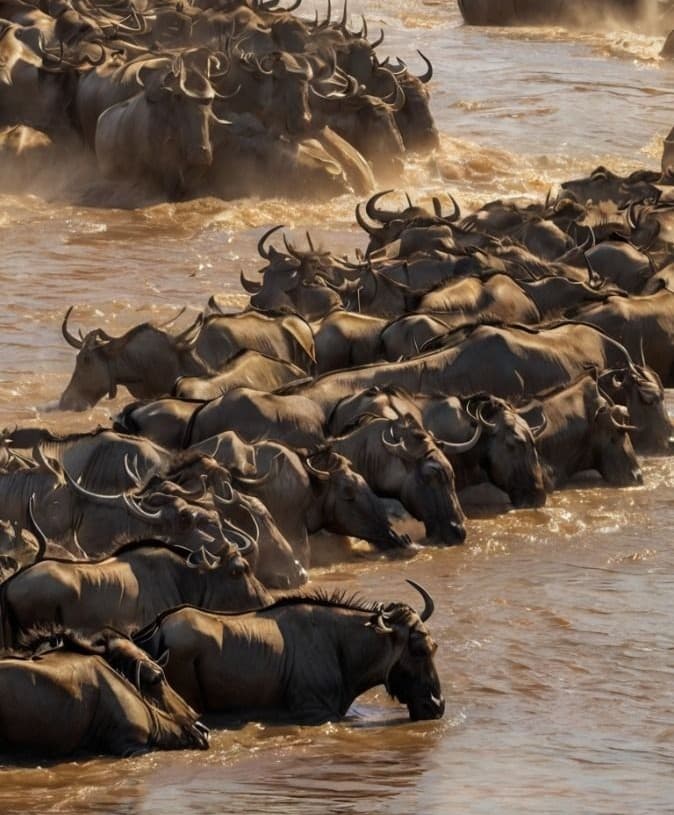
“The moment a thousand wildebeest leap into the Mara River simultaneously, splashing through crocodile jaws under the golden African sun—that's when you realize photography isn't just about capturing images. It's about preserving miracles.”
Top Photography Locations
The iconic image of the Great Migration. Position yourself on the riverbank and wait for the herds to gather. The tension builds as scouts test the waters, then suddenly—chaos. Hundreds plunge in at once. Use a fast shutter speed (1/1000s or faster) to freeze the action, or slow it down (1/60s) for motion blur that conveys the frenzy.
February brings new life to the Southern Serengeti. Over 8,000 calves are born daily, creating irresistible photo opportunities. Capture tender moments between mothers and newborns, or the constant threat from lurking lions and hyenas. Soft morning light bathes the plains in warm gold—perfect for emotive portraits.
Less crowded than the Mara, the Grumeti offers equally dramatic crossings from June to July. The river's wider banks provide excellent vantage points. Bring a telephoto lens (300mm+) to compress the scene and isolate individual animals against the rushing water.
Essential Photography Tips
After years of guiding photographers through the migration, I've learned what separates good shots from extraordinary ones. Here are my top recommendations:
Gear Essentials
- Telephoto lens: 100-400mm or 200-600mm
- Wide-angle: 16-35mm for landscape context
- Sturdy tripod or monopod
- Extra batteries (dust drains power)
- Lens cleaning kit (essential!)
Camera Settings
- Shutter speed: 1/1000s+ for action
- Aperture: f/5.6-f/8 for sharpness
- ISO: Auto (don't fear high ISO)
- Continuous autofocus (AI Servo/AF-C)
- Burst mode: 5-10 fps minimum
Light & Timing
- Golden hour: sunrise & sunset
- Avoid harsh midday sun
- Overcast days = soft, even light
- Backlight creates dramatic silhouettes
- Dust adds atmosphere to shots
Composition Techniques
- Include foreground for depth
- Use leading lines (rivers, paths)
- Capture behavior, not just animals
- Look for unique perspectives
- Don't forget the environment
Pro Tip: Don't just shoot from the vehicle. Ask your guide if you can position at eye level with the herd (safely, of course). Ground-level shots create intimacy and impact that elevated angles simply can't match.
Challenges & Rewards: A Personal Story
Let me share a moment that defines why I love photographing the migration. It was late August, 2019. We'd been waiting at the Mara River since dawn. The heat was building. Dust coated everything. My clients were getting restless.
Then, it happened. A massive herd approached the bank. Thousands of wildebeest milled nervously. The lead bulls tested the water, retreating, advancing, testing again. The tension was palpable. We held our breath.
Suddenly, one brave soul leaped. Then another. Within seconds, the river erupted with splashing bodies. Crocodiles struck. Calves struggled. Mothers called frantically. It was chaos, beauty, terror, and triumph all at once.
I fired off hundreds of frames. But it wasn't until later, reviewing the images, that I found "the shot"—a single wildebeest suspended mid-air, water droplets frozen around it, golden light streaming through the dust, eyes wide with determination. That image now hangs in my home. It reminds me why we do this.
The challenges are real: unpredictable weather, long waits, equipment stress from dust, physical exhaustion. But the rewards? Priceless. Every photographer who witnesses the migration leaves changed. You don't just capture images—you carry memories that shape your soul.
Ready to Capture Your Own Migration Story?
Join our expert-led photography safaris during peak migration season. Professional guides, prime locations, and unforgettable experiences await.
About the Author
James Mwangi - Wildlife photographer with 15+ years documenting African safaris. Featured in National Geographic and BBC Wildlife.